WILL BOWL THE SADDLER – My Great Grandfather
Article by: C A Stevenson
One October evening, when the setting sun was gilding the willow-tops along the Windrush, I sat with Will Bowl, the saddler, in his shop at Burford. He lives in Witney Street near to another craftsman, a bell-founder.
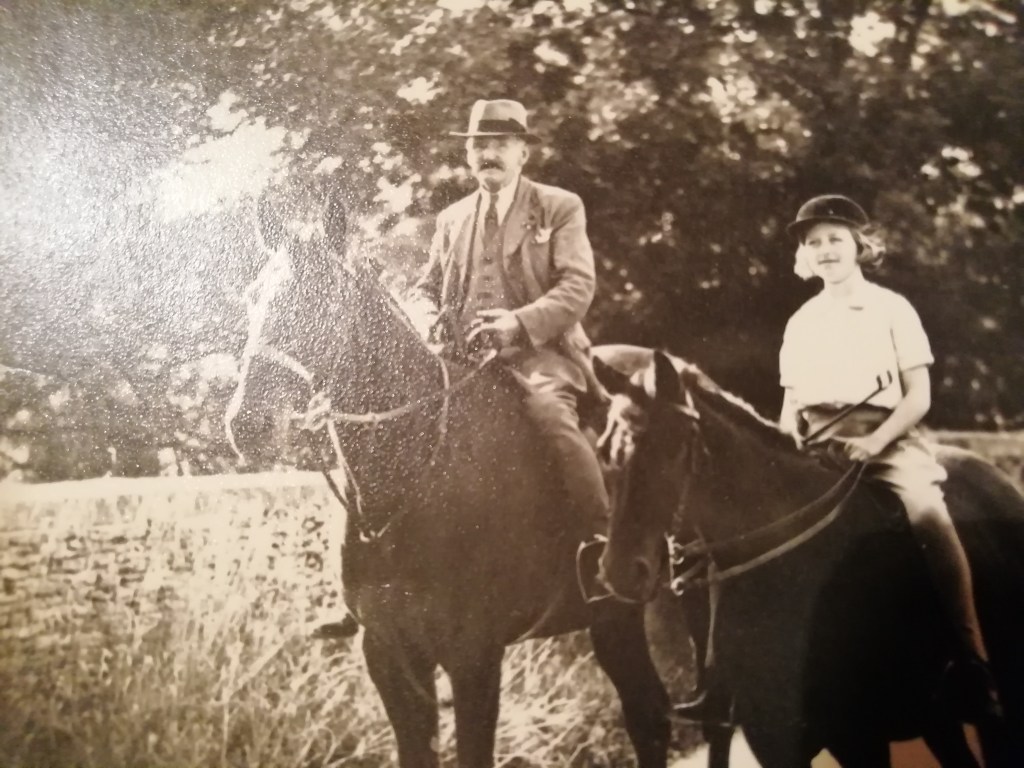
Will Bowl is eighty-four, a small, frailish looking man. As befits his autumnal age, the colouring of his wrinkled face appears like the reflection of October sunlight. Yet he is extremely agile and still rides to hounds. For over seventy years he has worked in this little shop. Serving five years’ apprenticeship, he received on shilling a week for the first two years and half-a-crown a week for the next three. For the last fifty-two years, however, he has been his own master.
When he spoke of the days before the horse was ousted by the motorcar, intense pride welled up at every mention of his ancient craft. He told me, too, that he used to repair the harness belonging to the last oxen to draw a plough on the Wolds. But saddlers appear always to have excelled at Burford. In bygone days the burgesses were ever anxious to display their saddlers’ work. It was fit for kings. In 1681, when Charles II came from Oxford to a race meeting on Upton Downs, he was presented, with a richly silver-laced saddle with holsters and bridle, made, it is said, by ancestors of Mr Bowl. Fourteen years later, when William III, on one of his progresses, visited the town, he also accepted a gift of a saddle from the Corporation.
Will Bowl’s ancestors once kept the Lamb Inn in Sheep Street. The house remained in the family for over a hundred and twenty years. In those days the horses in and around Burford numbered about a hundred and forty, many, during the coaching era, being stabled at the Lamb. The old saddler recalled the venison dinners held at the inn during the September sheep fairs to commemorate Whit-Sunday’s deer-hunting in Wychwood Forest, a privilege once granted to the inhabitants of Burford and the surrounding countryside. Bowl visualised the preparations for the feast in the kitchen – the haunches of venison and other good fare and home-brewed ale made from the famous malting barley grown on the Wolds. Also, he remembered, during the September sheep fairs, a double row of booths extending down each side of High Street and farm-servants standing for hire adorned with emblems of their trade.
When, with the use of mechanised transport, the need for his craft decline, Will Bowl became an instructor of horsemanship. He has ridden with five different packs of hounds, and is a picturesque character beloved by the masters and members of the various hunts. Now that horses are fewer, he executes repairs, to various articles of saddlery that are brought to him, many sent from distant parts of the country. Six pairs of bellows needing patching were lying in the little shop window, awaiting his skill. In the preservation of his leather ne never uses chemicals but always pure tan made from oak bark. Thus, maximum flexibility is assured.
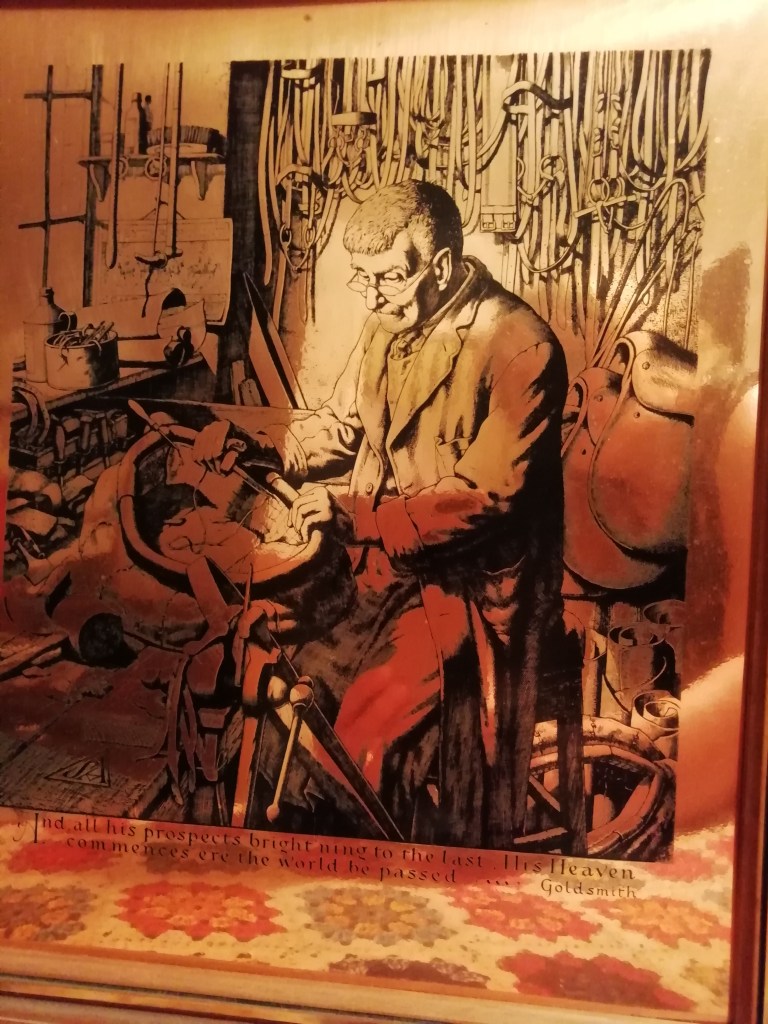
My Scottish terrier, MacTavish, now possess a collar made by this grand old craftsman. Alas, when Will Bowl takes his last fence his craft will die, too. There is no one in Burford to follow him. In the bar at the Bull Inn just round the corner is a line-drawing of the old saddler at work in his shop – a lovely picture bearing an apt quotation from Goldsmith. It has been hung in the Royal Academy.